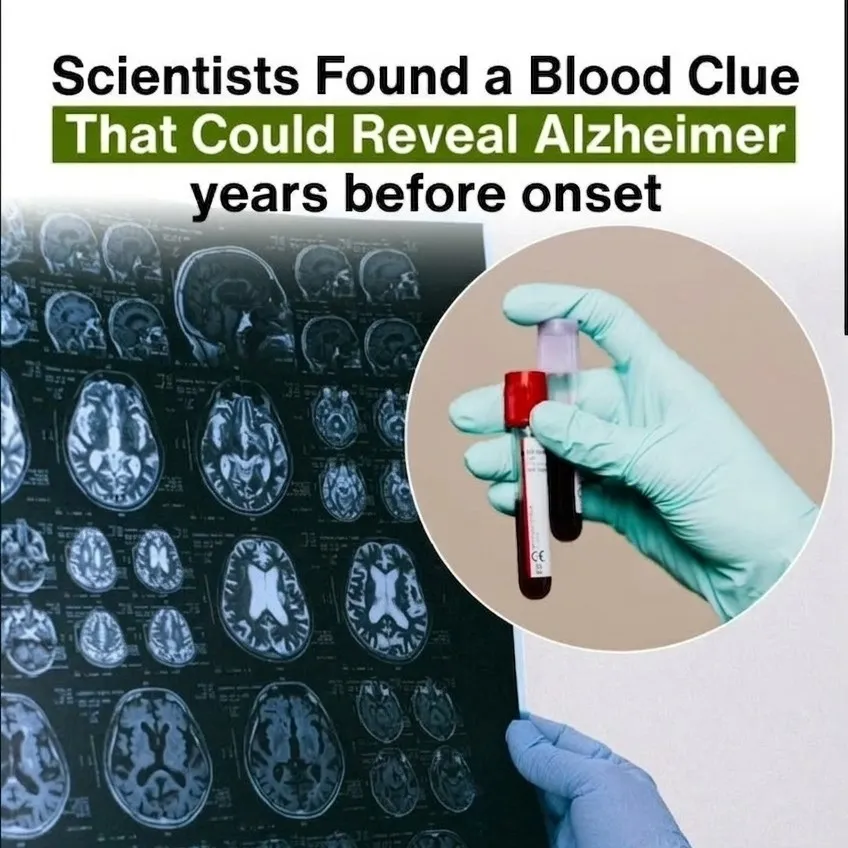
In a major step forward for neuroscience, researchers have unveiled a blood test capable of detecting Alzheimer's disease up to 3 to 4 years before clinical symptoms emerge. The test measures specific protein biomarkers in the blood that signal early neurodegeneration — long before memory loss or cognitive decline becomes visible.
💡 Key Finding: The test detects elevated levels of phosphorylated tau (p-tau217) — a protein linked to the toxic tangles that form in the Alzheimer's brain — with over 90% accuracy in early detection trials.
Why This Discovery Matters
Alzheimer's disease affects over 55 million people worldwide, yet current diagnosis methods — like brain scans (PET) or spinal fluid analysis — are expensive, invasive, and often come too late. A simple blood draw that flags the disease years earlier could transform how doctors approach prevention and treatment.
How the Test Works
The blood test focuses on a biomarker called p-tau217, a fragment of the tau protein. In Alzheimer's, abnormal tau proteins clump together inside neurons, disrupting communication and eventually killing brain cells. These abnormal proteins leave traces in the blood long before the brain shows outward damage.
By measuring the ratio of specific tau fragments, scientists can determine whether the characteristic plaques and tangles of Alzheimer's are already forming — even if the person feels perfectly fine today.
"Early detection means early intervention — and for Alzheimer's, every month matters."
— Research team perspective, 2025What Happens Next?
The test is currently in advanced clinical validation stages. Researchers aim to make it widely available within the next few years as a routine screening tool — much like cholesterol or blood sugar tests. Combined with emerging therapies like anti-amyloid drugs, earlier detection could finally give patients a fighting chance.

What It Means for You
If this test becomes routine, your annual health checkup could soon include an Alzheimer's risk screen. This would allow lifestyle changes, mental health strategies, and early medical interventions — potentially slowing or even halting the disease before it takes hold.
This is science at its most hopeful: catching what was once invisible, before it becomes irreversible.