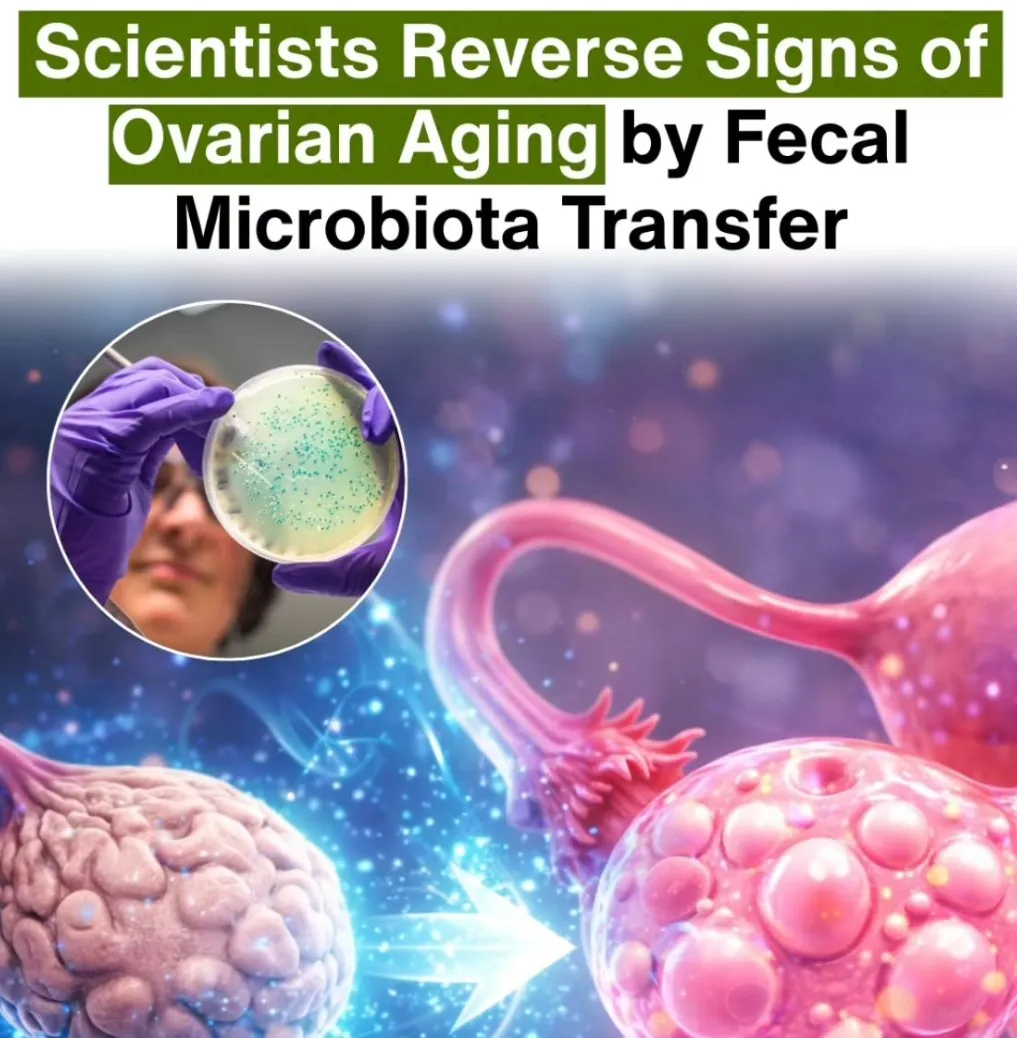
For decades, ovarian aging has been treated as an inevitable biological clock — one that ticks quietly until fertility fades and serious health risks begin to climb. As women grow older, declining ovarian function doesn't just affect reproduction. It triggers a chain reaction across the entire body, raising the risk of osteoporosis, memory loss, and heart disease. Yet despite how much is at stake, the biological drivers behind this aging process have remained largely mysterious.
💡 Key Finding: Transferring gut microbes from young mice into older ones reduced ovarian inflammation, improved gene activity, and partially reversed signs of ovarian aging — including a measurable boost in fertility.
The Surprising Discovery: Gut Bacteria and Your Ovaries
Scientists publishing in Nature Aging in 2026 noticed something striking: older mice carried a dramatically different set of gut bacteria compared to younger ones. Not just slightly different — the microbial landscape had fundamentally shifted. And that difference appeared to be directly connected to the health of their ovaries.
So researchers ran a bold experiment. They transferred gut microbes from young mice into older, estropausal ones — and the results were unexpected. The older mice showed less ovarian inflammation, healthier gene activity, and real signs of tissue rejuvenation. Their fertility even improved.
What's Actually Doing the Work Inside the Gut?
Researchers didn't stop at the big result — they dug deeper. They identified specific bacterial species and metabolites — tiny chemical messengers produced by gut microbes — that appear to drive these rejuvenating benefits. These compounds travel through the bloodstream, calming inflammation, supporting hormonal balance, and triggering cellular repair in the ovaries.
"A shift in gut bacteria alone was enough to partially reverse signs of ovarian aging."
— Nature Aging, 2026Introducing the Gut–Ovary Axis
Scientists are now calling this the gut–ovary axis: a biological communication channel between your digestive system and your reproductive health that we are only just beginning to understand. The idea that what lives in your gut can influence the aging of your ovaries is genuinely new — and it changes the way researchers think about women's long-term health.

Why This Matters for Everyday Women
If the gut microbiome can be intentionally changed to support ovarian health, the possibilities are enormous. Think targeted probiotics, specific dietary patterns, or microbiome therapies designed to delay menopause-related decline, protect bone density, preserve memory, and extend quality of life — all by tending to the bacteria that live in your gut.
Human trials are still ahead, but this research marks a genuine turning point. It means ovarian aging is no longer just a hormone story — it's a microbiome story too.
What Comes Next?
The field is now racing to identify exactly which bacterial strains and metabolites are most powerful, and whether similar effects can be reproduced in humans. Aging may not be as fixed as we once thought — and the trillions of microbes living inside you might just be your most powerful allies yet.